

Pain
The invisible enemy.

An audio version of this post is available below (for paid subscribers).
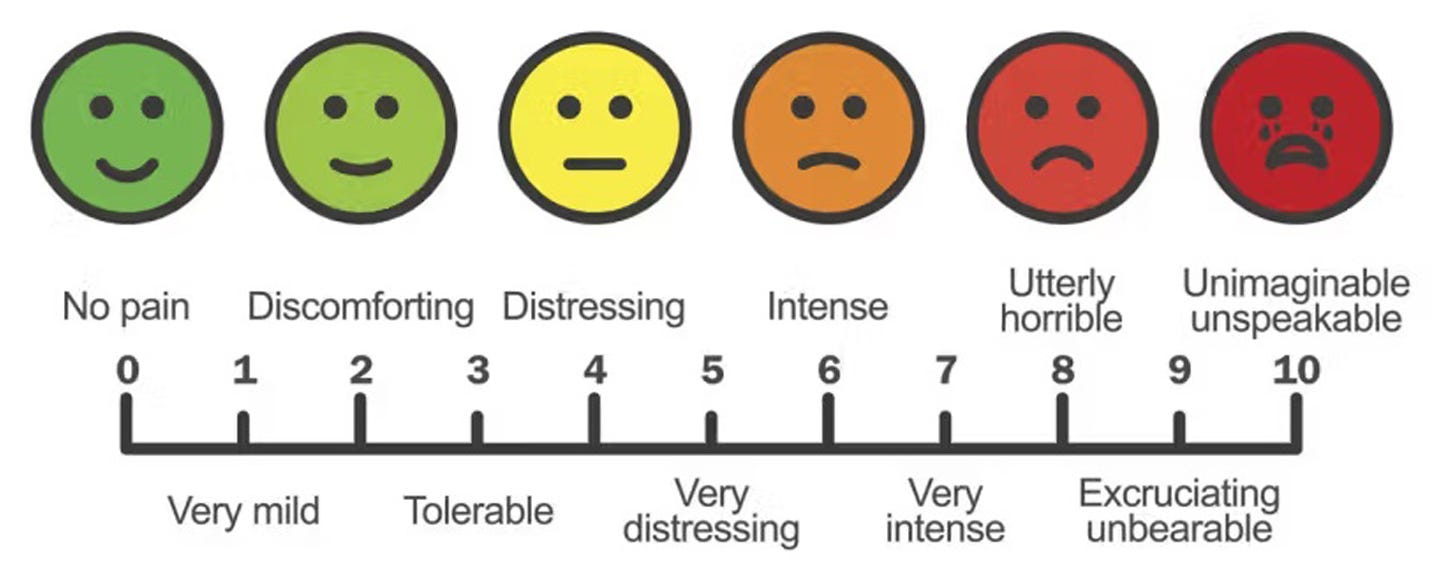
Pain scales can only measure so much. I suffer from migraines, and unless you’ve had one, it’s hard to describe exactly how one feels. With our kid, the tone of his crying can indicate whether he’s experiencing true pain, or if he just scared himself by stubbing his toe. And I wouldn’t even begin to try and guess what it feels like to give birth… The point is, pain is deeply personal and many times people are in pain and the rest of us never know.
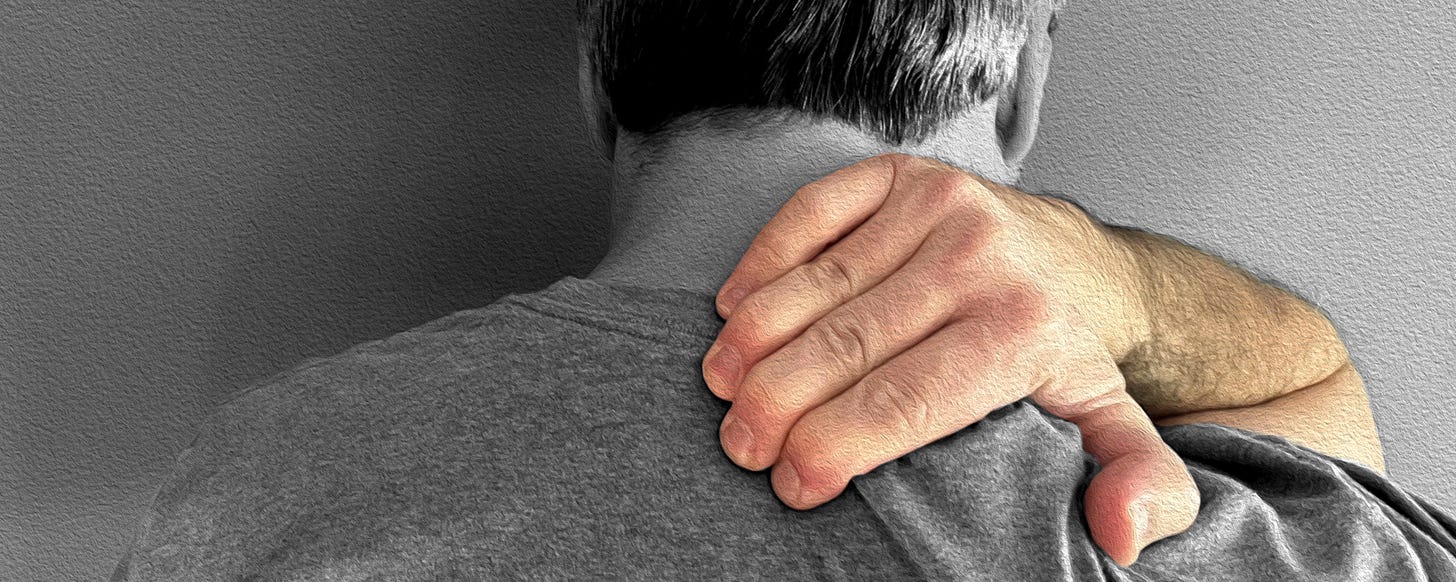
“The greatest evil is physical pain.” Saint Augustine
Pain is usually temporary, a cue from the body to the brain that something is dangerous, or has gone awry. For some, however, pain is a daily part of life. I reached out to three friends who have chronic pain, and two chose for their comments to remain anonymous. They don’t want people to know what they suffer. That tells me that we have more friends out there dealing with this than we probably realize. They may choose to keep this fact to themselves for personal or professional reasons, out of pride, or because they don’t want to be pitied. So if a friend opens up to you about an ongoing physical pain they have to manage, know you’ve become a trusted insider in their experience.
Here are a few ways you can help your friend’s body feel a little better.
Take it seriously
No matter how your friend describes their pain, it’s worse than you can imagine. It’s bad enough they have to experience it, let alone explain it over and over again. So when they offer a rare glimpse into their difficult world, and get into the details, remember their words, and adjust your expectations regarding their abilities. Let them know you’re someone they can count on to handle horrible things, and ask how you can help.
Of the people I spoke to, narrator (and my social media manager) Dianna Conley, was most open to sharing her experience:
I have kind of ‘gotten used to’ my base level of pain, and I imagine if someone else felt the pain I am constantly feeling, they might go to the ER or panic because they would assume they have an acute injury. This often leads to doctors, and our friends/intimates underestimating our pain and not believing us. The most powerful thing you can do to support a friend with chronic pain is to believe them when they tell you how much they are suffering. Also, being understanding and supportive when and if they have to cancel or adjust plans based on their symptoms.
Actually accommodate
The desire to alleviate a friend’s pain can manifest in strange decisions that can feel helpful, but only benefit those trying to help. One of my friends who asked to remain anonymous, told me about their experience dining out. Because of dietary restrictions, they couldn’t eat at a restaurant other friends wanted to try. Instead of just picking another restaurant, or letting the person back out of the reservation, the group doubled down on the first location, trying to make it work, ignoring the suggestions of the friend in question. This behavior was disguised as support, but it actually showed that friends can sometimes feel like they’re accommodating others, when they’re really looking out for themselves.
Again from Dianna:
Recent studies show that people with hypermobile Ehler’s Danlos Syndrome are at increased risk for long COVID. So I can’t hang out with people unless they are willing to wear medical masks in their everyday life in order to reduce their risk of giving me COVID when we hang out. The last six years have shown me overall that most people are very good at short term emergency support and grand gestures, but aren’t willing to stick around and actually be friends with someone who will never get better.
Don’t be dramatic
All three people I spoke to echoed this same sentiment. Engage in activities you know your friend likes, as long as they can manage them. Avoid comments like “thank God that’s not me,” or “if I had to deal with that, I’d die.” Those suffering constant pain don’t want to feel like super heroes. They’re just ordinary people dealing with extraordinary circumstances.
Dianna put it this way:
Humans have a hard time accepting that there are conditions that will just never get better. It’s hard to see a friend suffer, but trying to fix us is going to just lead to more suffering. If we don’t explicitly ask you for solutions for our pain, just listen, believe us, and ask us what kind of support or accommodation we need.
Reinforce healthy habits
If your friend has told you they need to maintain a balanced diet, or a consistent sleep schedule, to minimize their pain, don’t feed them garbage or cajole them into staying up all night. This might seem obvious, but it’s tempting to “treat” your friend if you know they’re having a tough time. Junk food and a tv show binge may sound like your ideal R&R, but if it causes a flare in pain for your friend that takes days to resolve, it’s not worth it.
“Mindfulness,” “meditation,” and “breathing” are also words that frequently pop up in articles about managing chronic pain. If your friend suggests practicing any of those will benefit them, encourage it, and participate if they ask.
Exercise, or any kind of repetitive movement, has proven helpful. It can pump your friend full of endorphins, but let them take the lead on how much they want to move. Remember not to fall into the “have you tried…” advice trap. If someone has been managing chronic pain then it’s likely they’ve tried it all.
Each case is unique
This is a general analysis of what it’s like for someone to live with pain, and how you can help. Everyone’s case is different, so be sure to get your info about your friend’s condition from them, and not the internet. If you want to know more about it, ask, and maybe they’ll lean on you when they need a bit of support. If they don’t want to share, just let them know you’re there if they ever do.
The deeper kindness and empathy we need often requires us to reckon with our own discomfort in facing the issue. We may have seeds of ableism growing inside us that we’re not aware of, and won’t overcome, unless we get honest with how hard it is to watch our friends suffer.

Let’s talk it out.
Have you, or a friend, had to change your lifestyle to make room for pain that won’t go away? Let me know in the comments.
An audio version of this post is available below (for paid subscribers).
Keep reading with a 7-day free trial
Subscribe to The Friend's Guide to Horrible Things to keep reading this post and get 7 days of free access to the full post archives.