

Interview - Greg Miller
Host, Entrepreneur, Pokémon Trainer, Dad, and Cancer Survivor.

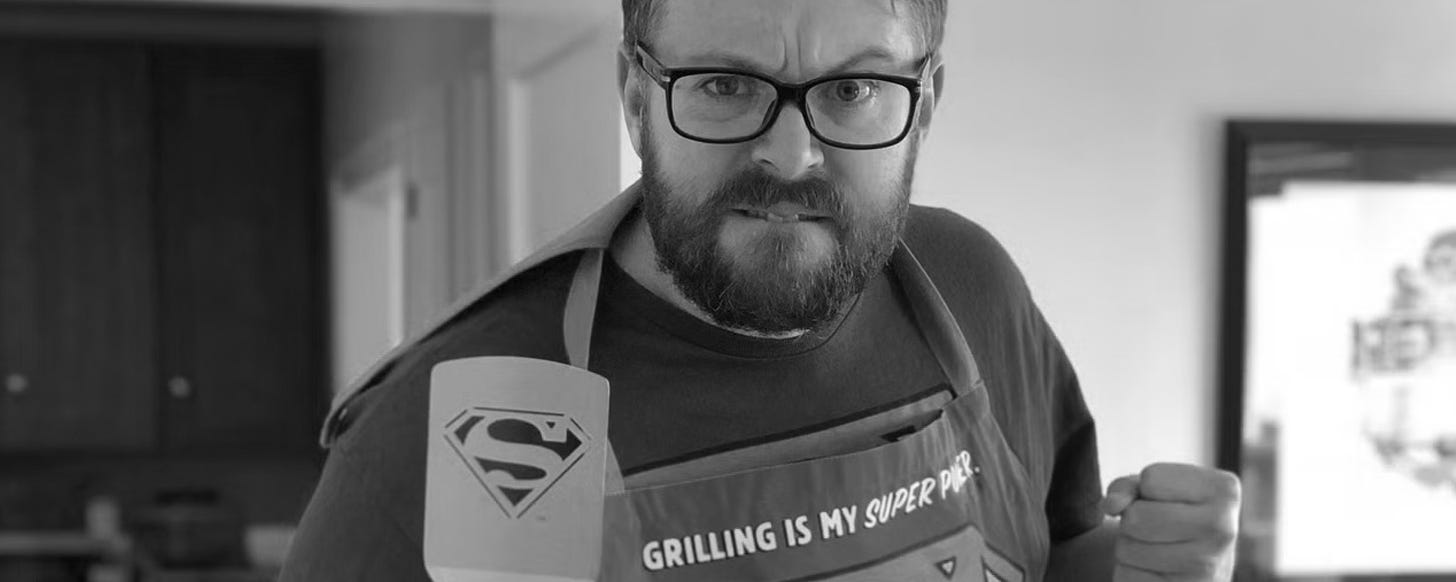
“The advice I give to everybody who wants to be there for their friend, their partner, whoever in these kinds of journeys, is that you got to be Superman. And what I mean by that is you’ve got to let the bullets bounce off. You’ve got to be invulnerable.”
Greg is a colleague that I have worked with and stolen many ideas from. He is a force of nature, and also one of the most genuine humans I’ve ever met. He co-founded and operates Kinda Funny, which just entered their 11th year. In 2012 he was diagnosed with, and subsequently beat, Hodgkin’s Lymphoma. His story has inspired millions of fans and taught me a great deal about helping communities, big and small.
Brandon: Greg Miller, welcome to The Friend’s Guide to Horrible Things.
Greg: Hello, Brandon. How are you? It’s been too long.
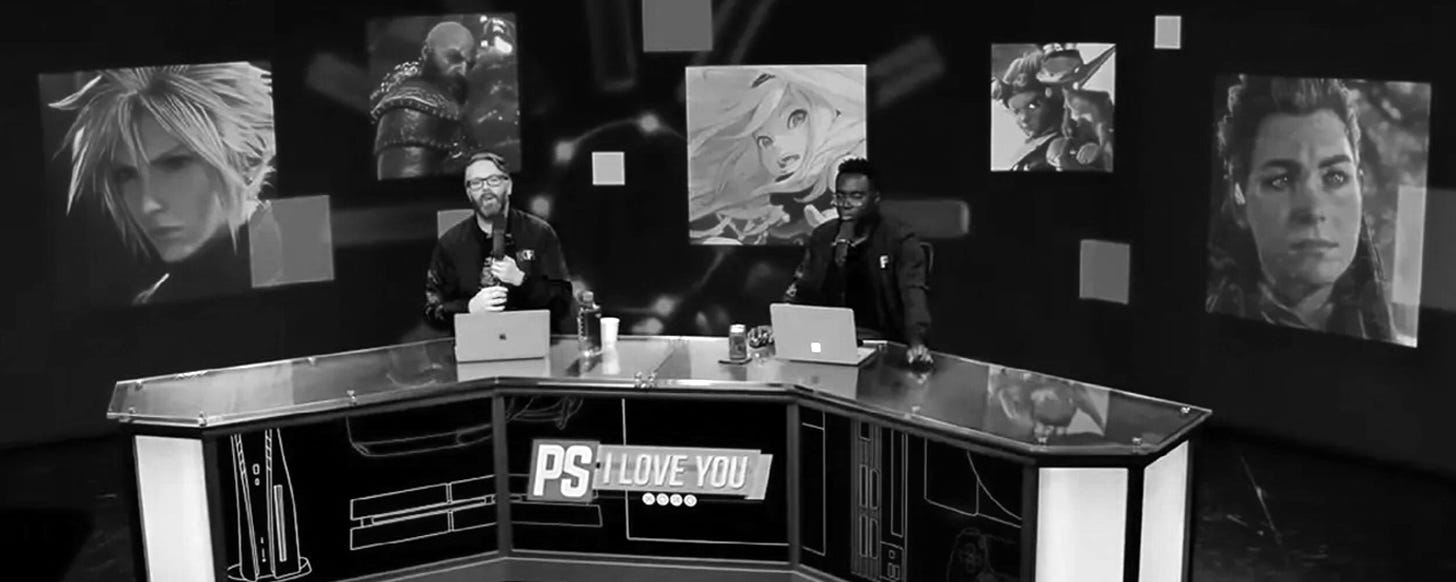
Brandon: It has been too long. Chatting with you is like riding a bike, Greg. We pick up right where we left off. You and I have had similar positions in the gaming industry. I have been out of the loop for a long time, but we host things, we talk to people, we live stream.
Greg: That’s right.
Brandon: So we are colleagues in a way.
Greg: How is retirement going?
Brandon: It’s a pseudo retirement, you know. Look at me, content creating.
Greg: Exactly, exactly.
Brandon: Got to get my fix. But you’re up there in San Francisco, I’m down here in Los Angeles, and so we don’t get to actually socialize in person that much.
Greg: Sadly.
Brandon: So it’s lovely to see you. I’m gonna give our viewers and listeners a little bit of context for the conversation that we are about to have. 13 years ago, 2013, correct me if I’m wrong, you were diagnosed with Hodgkin’s Lymphoma.
Greg: 2012
Brandon: 2012. One year later, you recorded a video where you said “I can’t believe it’s been a year.” I want to quote you from that video.
Greg: Sure.
Brandon: You called it “...the cancer that took my life. Well, it didn’t take my life. It took over my life. I’m right here. Obviously, I’m not dead.” You’re still here, Greg Miller. (applauds)
Greg: Thank you. Yes, yes. So lucky to be here.
Brandon: This is a big topic. There’s a lot of stuff we could talk about, but this is The Friend’s Guide to Horrible Things. So I want to talk about your friends. We have online friends. We have in person friends, sure, specifically your nearest and dearest. How did they help you going through that year?
Greg: They helped me in a number of different ways, right? I think when you ask that question, immediately my ex-girlfriend, Kristine Steimer, jumps out. Kristine saved my life. Kristine and I dated a total of six years. We had done three years, taken a break and come back for three additional ones. And this was right at the start of that second go around, the sequel to the relationship. In the first round, we had lived together already, we had done the whole thing. So the second time around was a little bit more like laissez faire about it.
And I remember when this started, and I was diagnosed at the end of summer, which would have been the end of July, beginning of, August of 2012, I remember telling her, and the first thing she said was, “I’m moving in.” And she did. And she asked, “How are you going to get to chemotherapy every other Friday?” And I said, “I’m going to take the bus.” And she said, “No, you aren’t. I will be there.” I think the week before, or the week after, she had started a new job at PlayStation. And so you can imagine what that took, walking in immediately, and being like, “Cool, every other Friday, I’m not going to be here. My boyfriend has cancer, and I’m going to take him to the doctor.”
It sounds like a no-brainer, and it should be, but as we all know, in a corporate environment, maybe it won’t be. Maybe it won’t be well received, that that is what you’re going to do with your time. But she did it, and she was there for me in every way, shape, and form. I think it was about that. It was about being there. I always tell the story of how she did that the entire run. I was going to originally have chemotherapy for six months, and I think I ended up getting it done in four or five, depending on when I started. And that final one was right before Christmas. We did it on Friday. And then she went up to see her family on Saturday for the holiday. And she said over and over again, “Are you going to be okay? Is it okay?” And I’m like, “Yeah, yeah, it’s fine. It’s fine. It’s fine.” And so then that Saturday, on the couch alone, I was like, “Oh, my God, if it had been like this every time. With nobody there for me. If I had done it this way…”
And obviously there would have been other people there who would have stepped up or done whatever. I couldn’t have done it. So Kristine is always intimately, and so unflinchingly, connected to my cancer story. Because, of course, at IGN, there were plenty of people who picked up the slack.
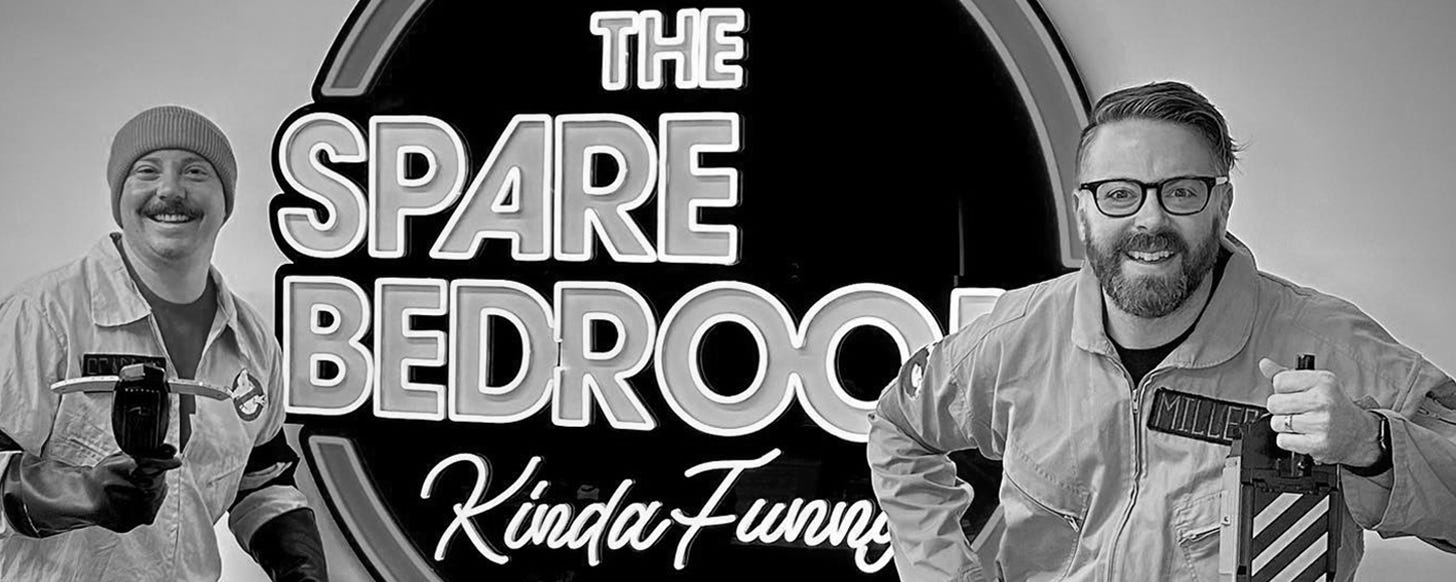
I always want to give a shout out to Colin Moriarty, my former roommate, my former co-founder here at Kinda Funny. He was my roommate. He was my co-leader on the PlayStation team. And so clearly, at work, he had to take on more of the brunt of it. At home, he had another person move into the house, and then also had me. Chemo gave me a hair-trigger temper. Which meant I was either screaming sometimes, or sobbing sometimes. One time I remember Colin asking me, “What’s going on with all these boxes?” And I lost my mind. You know what I mean? And so there was that part of it. All the credit for what Colin got me through.
Kristine was there in those intimate moments, with me, each and every step of the way. Every chemotherapy, right? Every story I tell about how horrible it was, or what I went through, she’s in that room with me. And I think that I knew at the time, and I knew after the fact, the impact her support had on me. When me and my wife Jen had our son, Ben, after the dust had settled and I was able to finally communicate how traumatic the birth was, because it was just so bad for Jen, so bad for Ben, one of the first people I reached out to was Kristine. And I was like, “I always knew it from my perspective in that chemotherapy room, but to be in a hospital room on the other side now, where you are just completely useless. There’s nothing you can do. Things are going wrong. Doctors are panicking. To have seen that with my own eyes and live that, I have another level of respect for you. Being there for me.”
Brandon: Has your perspective changed on the outside looking in? Have you had friends and family deal with issues that make you think, “Wait, I have more instincts now to know maybe what this person needs or how I can help.”
Greg: Just recently, somebody wrote in talking about the fact that their partner just lost their grandmother, and it’s the first close death they’ve had in their family. They said “I know you went through something similar with Jen’s mom. Could you give me advice on being there for her?” And I gave the advice I had, I also distanced it from Jen’s point of view and put it more to my point of view of what it was to be hurting and needing help, but not knowing how to do that.
The advice I give to everybody who wants to be there for their friend, their partner, whoever in these kinds of journeys, is that you got to be Superman. And what I mean by that is you got to let the bullets bounce off. You got to be invulnerable. And that means that in the same way, me screaming about boxes in the house, or just being a bad boyfriend because I’m dealing with my own things. Or not remembering a birthday, a date, whatever it may have been. You’ve got to understand and not take it that personally, right? Depending on if you are a very bad partner, a very bad friend, maybe take it personally, but in the grand scheme of things, understand that their world has been rocked off its axis. You need to understand that this isn’t about you. There are bigger things happening.
Brandon: You mentioned talking with your community. You and I have both worked with fans. We’ve both operated crowdfunding enterprises, and we are very grateful. And beholden to this massive community that’s responsible for our paychecks. I’ve always been surprised and envious, and really looked up to your ability to be honest and connect with this community, even with something as deeply personal as your experience with cancer. How has that been to manage? Of the lessons you’ve learned, trying to bring the community in and tell them about things, but at the same time, put up a wall there, because you just absolutely have to at some point.
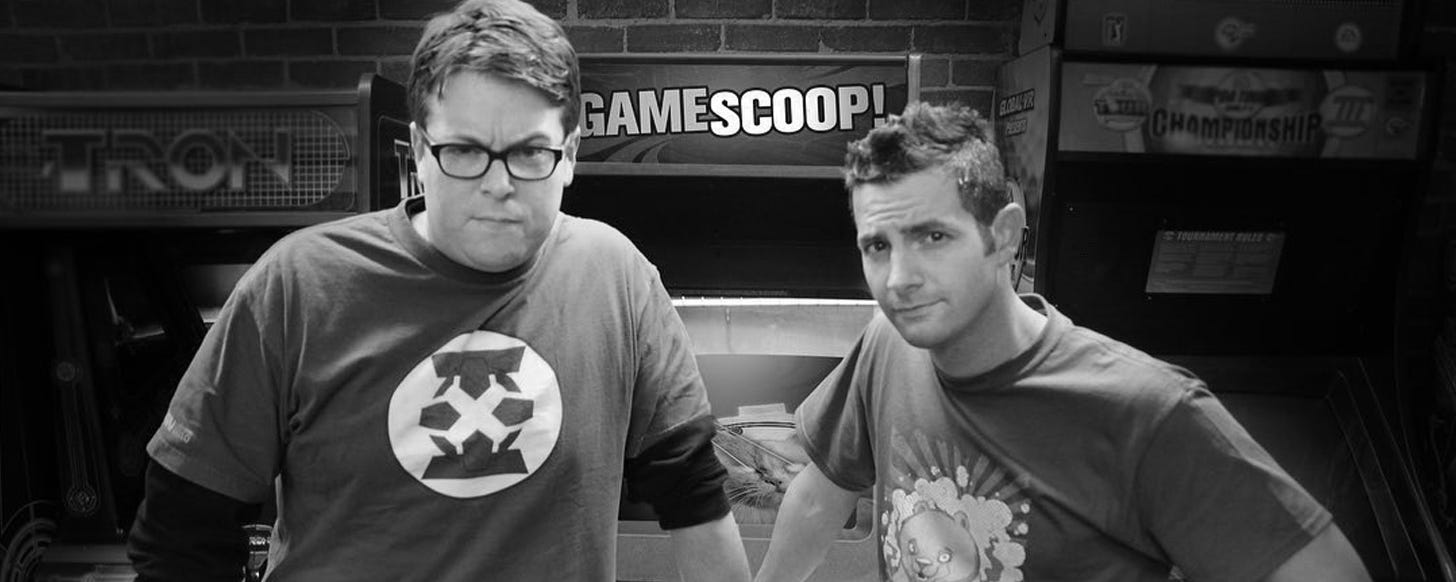
Greg: It’s an interesting question, and it’s one I feel I’ve been approached about a few different times on a different avenue here and there. The boring answer is that – what’s surprising to me about it, or what I’ve learned is that – not everyone does it this way. The way I talk to the community, and the way I interact with them, and what I share with them and everything else. I don’t know another way to do it. We call the Kinda Funny audience the “Kinda Funny Best Friends.” And that’s something I had created at Game Scoop, at IGN, when I was going through my divorce, way back in 2009.
I remember definitively saying it on the podcast where I started getting choked up. I was like, “I want them to know, I’m not getting choked up about my marriage right now. I’m getting choked up telling you how much you mean to me.” And I said, “You know me better than my dad does, who I talk to once a week and have a stilted fifteen minute conversation that involves what the weather’s like in Chicago. You are here every week listening to me talk. You are my best friend. Sure, you know my thoughts about the latest video game, but inevitably, my personal life seeps into that.” We talk about it that way, and that was the way back then, when we had no idea how many people were listening to a podcast, and IGN thought maybe we should stop doing podcasts because they seemed like a waste of time.
Brandon: Wow.
Greg: That’s what grew into this business, because that’s all I know how to do, and how to share. I think the reason I’ve been able to find a fan base, a community, a modicum of popularity, is the idea that I know I’m living so many people’s dreams, right? I got to go to IGN and be like, “Hey, I wanted to do this my whole life. It’s all I’ve ever wanted to do, and now I’m doing it.” And I think that I was the first hire at the time who really had that message. That was their story, and now it’s everybody’s, of course, but it was easy to glom on to and see me kind of live my dream.
Brandon: When I re-watched your one year, looking back video, you showed a lot of emotion, and I appreciate that so much. I’ve talked about a lot of that on the Substack, but your willingness to not say, “Okay, let’s get another take on that, because I sobbed my way through that a little bit.” It’s so genuine, and I got really choked up, staring at Greg from over a decade ago, talking about this.
Greg: That’s where I slide down the slide, right?
Brandon: Yeah. I think it’s all in one take. You just sit on a park bench. I could tell you were talking really fast and trying to process everything. And it’s a beautiful video. There’s also a much longer, hour plus, examination of the entire process, that you recorded at PAX West. But even just that five minute video is a really interesting time capsule. You really bear your soul in that video. And I want more people online, specifically more men to be able to do that. How do we do that, Greg? How do we encourage men out there to be more open with their feelings and confess that when you’re going through something like this, you can be tough, you can be brave, you can surround yourself with people that are strong. But at the end of the day, it’s not a terrible thing to show your emotions like that.
Greg: I think that’s a two pronged answer for me. Number one, of course, is lead by example. If I was to go out there and be phony and do another take, even when I get choked up and you see me stop, it’s never me stopping the crying. It’s me trying to make a point. It’s not the (sobbing noises) that I can’t say what I’m trying to say. That’s happened so many times on camera for me.
So there’s that part of it, but the other part of it is, understanding that watching something and consuming something, listening to something like that, can often be such an isolating experience. You are in your car, you’re reading the transcript of this interview at your computer desk. It’s the idea that there are more of us, people who would cry and not see that as a weakness, than there are people who would see it as a weakness. I think that idea of masculinity is outdated. And I especially think, in the circles you and I run, it would definitely be the outlier, rather than the rule. So many of our friends and colleagues would never say “Oh, crying is weird,” or whatever. That’s just not happening.
Brandon: So obviously, you had a very difficult year (in 2012). You’re going through chemo. You’re on this road of uncertainty. You make it through. That’s over a decade ago. How do you prefer friends to help you? How have friends been able to help you, maybe surprise you, in all of the time since? Because I imagine this is not something that’s completely left your mind on potentially a day to day basis. What has the last decade been like? Having been supported with your friends, as a cancer survivor.
Greg: As a comic book nerd, I talk about it all the time. It feels like my storyline has been rebooted so many times. When they reboot Superman, or he’s not with Lois anymore and his parents are dead, or they’re not there. But the core stuff - Smallville, Krypton - that’s all there. So for me, for the longest time, the IGN part was there. It’s Kinda Funny. It’s video games. I’ve always said as a Lost fan, my wiener dog Portillo was my constant. He was always there. The story never rebooted without him. And now even that’s gone.
But the cancer thing feels like three lifetimes ago, and so I often forget about it until someone needs me. When I was going through it, and being supported by IRL friends, one of the most touching things was, right after I announced that I had cancer, I had to pull out of PAX West. And I couldn’t do it, obviously. And at the meet and greet, they had printed big postcards, and everybody had written messages on them, audience members and fans. I cherish those and love them so much.
But then, years later, it’s almost like the Bat-Signal. I get that strange text. I got a text from Hank Green, and he’s talked about this publicly, which is why I’m happy to share it. But Hank Green texts me, and I’m like, “Oh, hey. He never texts me.” We BS for a second. He’s like, “I’ll call you later this week. It’s not about business.” And I was like, “Oh, you have cancer, or someone you know has cancer, because that has been the calling card.
Brandon: “Brandon Jones is calling me? What’s going on?”
Greg: Exactly. Yeah. I don’t mean for it to sound flippant. It’s like “Oh, right, that is a role for me to do now. To sherpa people through this, either for themselves or for their partner or for their friend, and give them a little bit of insight into what’s going on here.” I take that very seriously. That’s a cherished role for me. That people, still to this day, think so much about that. We sent Blessing and Roger to Kojima Productions. When they met Hideo (Kojima), he asked if I was okay. Because even though I’ve talked to him so many times, he still was like, “But does Greg still have cancer? And they’re like, “No, he’s fine.” It’s awesome to be cared about that much and be in a role of some kind of weird graduate or cancer mentor. I don’t even know what you want to call it, but somebody who can help people that way. I think that’s an important place to be.
Brandon: The primary motivator for me working on the Substack is “Okay, how do I funnel all of this? Into something where I can continue to learn and hopefully help other people. Just like you today, Greg, are helping other people.
What about anniversaries? If you were to get a text on maybe the anniversary of the diagnosis, or when you got your free and clear. Are those appreciated? Because, as a friend, I might be nervous. Like, “I don’t want him to think about it today. If he’s not thinking about it today, I don’t want to remind him.” But at the same time, it might be nice to get a little bump. Like, “Hey buddy, thinking about you.”
Greg: Funnily enough, the video you’re referencing, the cancer one year later, was filmed by Andrew Goldfarb, formerly of IGN, now over at Sucker Punch. And it was filmed because that day he turned to me and was like, “Oh, it’s your anniversary.” And I was like, “Oh, is it?” And he’s like, “Yeah.” I’m like, “Oh, I guess I should do something. Come film a video for me at the park next to IGN.” And so I’ve never been that guy about anything. I always lose Game Showdown because they ask, “What’s the anniversary of this?” And I’m like, “I know PlayStation 2 because I bought it,” and any other thing else is lost to time. And so for a while there I had it on the calendar. This is the anniversary of the announcement, or the final chemo or whatever, so I could do a post about it. Celebrate it. And, again, lean into this role. I can be an example to somebody because I had it, and I’m okay, and remind people that I’m okay.
But something very interesting happened in the lead-up to Ben’s birth, my son, in October. 2021 was the final time I acknowledged publicly my cancer anniversary of diagnosis, or announcing the diagnosis. For so many people, it was bullet point number three of who Greg Miller is, but I don’t think about it. Not all these different things. And what I started to see was, only remembering it for the bad things. On my arm I have a permanent bruise from where they tested me to see if I was allergic to this one chemotherapy.
Brandon: Wild, it’s still there, all these years later. Wow.
Greg: Spoilers: I was allergic to it, and it’s a whole nother story. But when Portillo died, I covered it with his paw print, because I don’t want that to be part of my story. I don’t want that to be what I have on my arm. I have a white spot in the hair on the back of my head that never showed up until chemotherapy.
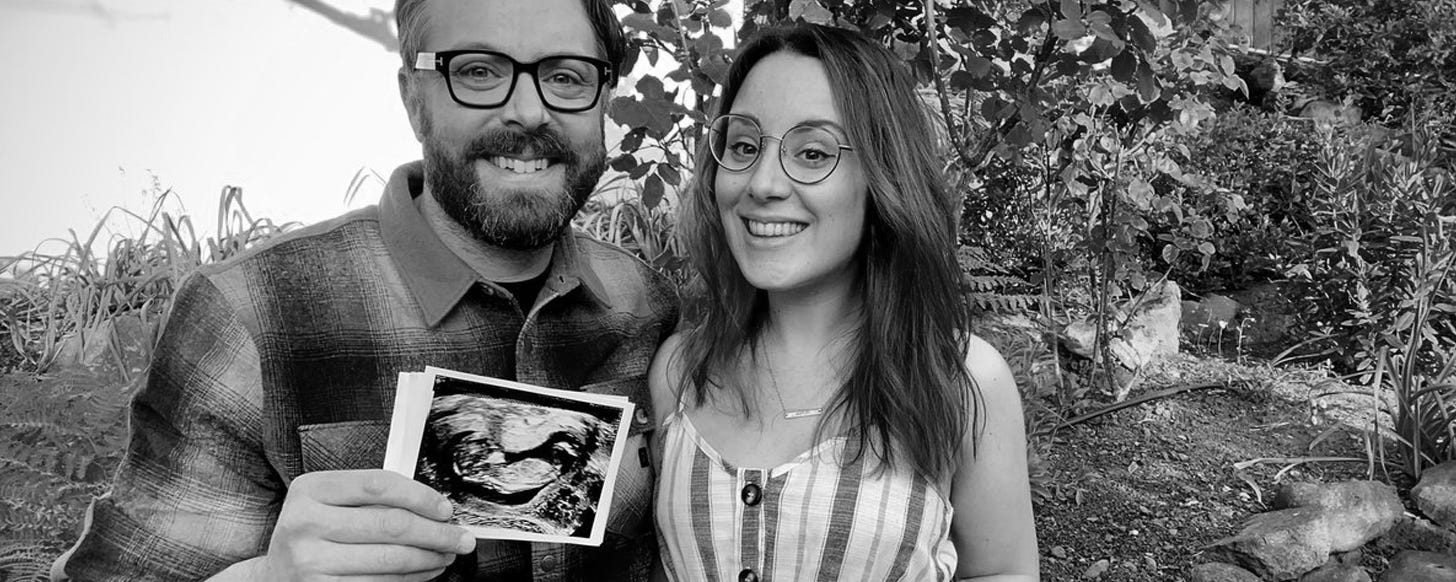
But the final glancing blow, again, I’m moving on with life, and I’m not thinking about cancer at all. When Jen and I were trying for a child, it was taking a while, and we finally went and ran tests. And it was what I had been worried about. In 2012 I was adamant that I didn’t want children. I knew I didn’t want children. I hadn’t wanted children for so long. It just wasn’t going to be a thing for me. And so I had been warned like, “Chemo can make you sterile, so you should save semen, you should do this whole thing. And I looked at the prices on an IGN salary, and I was like, “No, thank you. I won’t be doing that.”
And so we ran the test, and I remember getting the call with Jen of like, “Yeah, you aren’t sterile, but you’re so close. You’re on that cusp of it where, to make this happen, we really should go with artificial insemination. Do the whole thing.” And I remember hanging up. I picked up the trash. I went and I broke down in the elevator, just sobbing. Because, again, this stuff is so not in the forefront of my mind. I don’t think of myself as a cancer survivor. I don’t think about it all the time.
And so when it just shows up, it rocks your life, just knocks you again, on your ass, off your axis. I just lost it for that ride down, and the ride back up. And then I pulled it together. And we went out there and did it. And Ben was conceived naturally. But, literally, the next week we were gonna give them $40,000 and start doing this. I would have been broke as a joke, but I was incredibly happy it went that way.
The legacy I’m at with cancer for the most part, the calls, sure, but then there will be these incredible things I did not see coming that just destroy me. Right after Covid, that first flight. I fly United. Usually they give you those little wipes that you open up and you wipe down all your surfaces. And I sat down in the seat, and people started opening them, and it was bam, that alcohol smell that they used to give me right before giving me my IV. I am not a panic attack person, but I was having it. I turned to Jen. I’m like, “Wow, I’m freaking out right now because of that trigger.”
Last year, I had the opportunity to go film a movie, and part of the movie had me on a hospital bed, and they were going to give me an IV. There was a fake IV, obviously, but they laid me out there, no shirt on, because I have such a great physique. They taped the fake IV to my hand and had it in the bag. This was an intense effects shot. So they sat me there for 45 minutes, moved cameras around and argued about things. And 20 minutes in, I just started crying. Not sobbing, but “tears crying,” because it felt so real having the tape on my hand. It was like, “Oh my god.” I was in fight or flight and I couldn’t get away. It was crazy.
Brandon: That gets back to you talking about how agitated you were going through the chemo. If you’re dealing with a friend, one of the things that I say repeatedly is, “Give up on all expectations, because you have no idea what’s going to be a trigger.”
Greg: Yeah, yeah.
Brandon: You have no idea what experiences they’ve had that they haven’t been able to share. So a lot of weird stuff will come at you.
Greg: Definitely be ready. Let them walk away. I think that’s the thing. Let them walk away and process that and come back. Because that’s how it always went. I came back. “Sorry, Kristine. Sorry, Colin. Sorry, somebody at work. It wasn’t about that. It wasn’t about you. And I know you know that, but I need to acknowledge that I also know that, and that was out of line.”

Brandon: Before we wrap up, any general advice? This can be something that has absolutely nothing to do with your survival, but maybe something you dealt with a friend. “I have a friend who just had something really lousy happen to him. What’s an easy way that I can help him?”
Greg: I think the easy answer is to be there. And I think you know your friend better than I do, so that can be a number of different things. Whether it is, “Hey, let’s go play this game together. Hey, let’s go to the movies. Hey, let’s get a beer.” A text of “I am here for you.” Whatever it needs to be. That was, and is, so important. For anybody going through anything to understand that depending on what your friend’s relationship and emotional IQ is, for lack of a better term, that there are resources there, and you’re one of them.
An audio version of this post is available below (for paid subscribers).
Keep reading with a 7-day free trial
Subscribe to The Friend's Guide to Horrible Things to keep reading this post and get 7 days of free access to the full post archives.