

Fighting
The pain we cause when our anger takes over.

An audio version of this post is available below (for paid subscribers).
Fighting, verbally, is a skill. Some of us are really good at it, with loved ones and strangers alike. Those fights can be productive ways of resolving conflict, reaching an agreement, or sharing grievances. Think “debate,” rather than “scream session.”
But then there’s the other kind of fighting: Yelling, name-calling, door slamming, and finger-pointing, and it happens both face-to-face and (more and more frequently) online. This kind of fighting is hurtful and destructive, and yet many people seem to take a bizarre pleasure in doing it over and over. Is it because we want to win? To be right? Do we expect it to solve our problems, only to walk away, disappointed? Or do we just forget, in the heat of the moment, how pointless it can be?

“Nobody can hurt me without my permission.” Mahatma Gandhi
Surviving an emergency can involve dodging multiple opportunities to get in a fight. You could be getting drinks with a friend, or sitting down for Thanksgiving dinner, when suddenly someone blindsides you with a drastic difference of opinion. Add to that the pressure you feel to protect those you care about, who are going through a horrible thing, and you could end up defending them in a way you’ll regret later.
Here are some questions to ask if you want to save your sanity and avoid unnecessary confrontations:
Is fighting the best way to get what you want?
It’s important to remember your core values when a fiery argument erupts. Before you lose your temper, pause (if you can) and evaluate what you stand to gain. If you’re walking into a situation rife with elevated emotions, imagine how you’ll act if people start getting verbally aggressive. This doesn’t mean you should waste time having imaginary arguments (coming from someone who does that a lot), or write a list of edgy comebacks you can tuck into your pocket and rapid fire if the need arises. It means you should connect your goals to your actions, and try to make similar decisions before, during, and after a potential fight.
How much of a victory is winning?
Say you accomplish the impossible - yelling at someone and completely changing their mind. What’s next? Even when you’re vindicated, by force, what have you achieved, really? Did the other person actually agree with you? Or are they placating you, or tired of fighting, or intimidated into submission?
In my teens, I had a profound revelation after my mom and I had screamed at each other for the hundredth time over a subject so trivial, it eludes me decades later. I realized the assumption that “I was right” and the desire to “win an argument” were two completely different things. “Winning it,” aka being satisfied with my performance, didn’t bring me any closer to my desired outcome. It just made everyone mad, and I still didn’t get the validation I was seeking.
In the book “Hunt, Gather, Parent,” by Michaeleen Doucleff, there’s a section about how in some cultures, people laugh at adults who try to argue with children. The child doesn’t have the same emotional tools, nor the capacity for logic, that the adult (we assume) has, and therefore the idea of picking a fight with a kid shows the grown-up’s immaturity. The same could be said for when anger overwhelms in an adult-to-adult situation. Don’t assume you can yell logic into someone else’s brain.
There are circumstances where these rules don’t apply. If someone’s life is in imminent danger, feel free to release the hounds, just recognize you’re doing it beforehand, and in this instance the goal of the fight isn’t to win: it’s to prevent harm.
Before you speak, let your words pass through three gates. At the first gate, ask yourself, “Is it true?” At the second gate ask, “Is it necessary?” At the third gate ask, “Is it kind?”- Rumi
How easy is it to say something you’ll regret?
We’re not our best selves when we fight. How can we be? Our brain (flooded with adrenaline) catapults nasty thoughts at our mouths at such a dizzying speed that there’s no way an empathetic mental filter can do anything to shape them into cohesive, constructive statements. We swear. We ridicule. We confess negative feelings we’ve harbored for a long time. And our brain tells us that the behavior is justified. Even helpful. But when the dust clears, the damage can’t be undone. So when you’re loading your ballistas with pointed barbs, take a moment to consider their emotional permanence. Choose another plan of attack, or leave the battlefield and take a deep breath instead.
Are you prepared to be the latest problem?
You don’t have to fight. Most of the time, you have that choice. And it often involves physically removing yourself from a hostile situation. I was given this advice during therapy years ago, and it initially made me very defensive. “Leave the room? That means they win!” But victory can take different forms. When I exercise this type of freedom these days, I take way more comfort in the results than I would have, had I let my anger take the wheel.
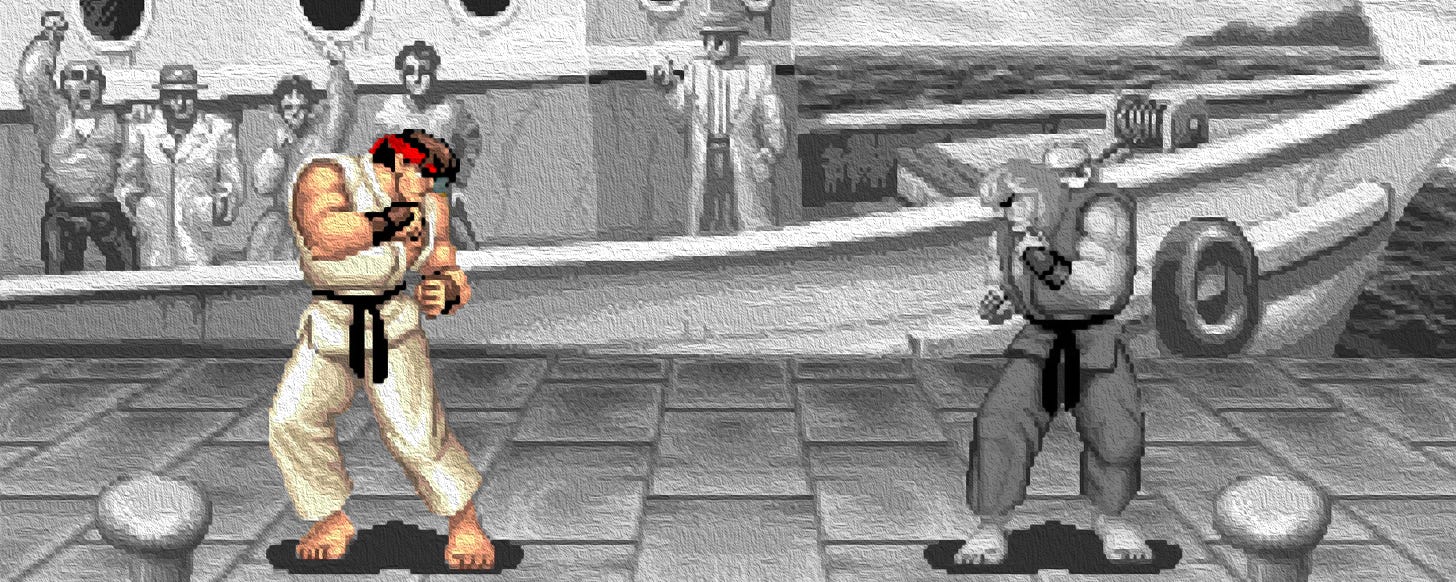
The aim of argument, or of discussion, should not be victory, but progress.” - Joseph Joubert
Some of you are proud of your fighting prowess, and I respect that. We all have different survival skills. I don’t want these questions to pass judgment or make you feel guilty about any fights you’ve ever fought. But from my experience, deciding to argue didn’t work out to my advantage. When my son was hospitalized, I had a series of screeching fits I’m not proud of. They taught me valuable lessons so, in a strange way, I’m grateful for them. Now, I aim to stay cool and collected as long as I can, circumventing any future entanglements. It may be foolish to expect myself to stay away from every fight, but fighting less is still a worthwhile crusade.

Let’s talk it out.
Did your worst fights teach you anything? Any strategies for avoiding conflict that have helped you in the past? Let me know in the comments.
An audio version of this post is available below (for paid subscribers).
Keep reading with a 7-day free trial
Subscribe to The Friend's Guide to Horrible Things to keep reading this post and get 7 days of free access to the full post archives.