

Empathy
Truly feeling what it’s like to be someone else.

An audio version of this post is available below (for paid subscribers).
In the immortal words of Nazareth: “Love hurts, love scars. Love wounds and marks any heart.” They got it exactly right. Staying connected to someone who’s going through one of the hardest challenges of their life is a choice, and not one everyone can make. What gets us through it is empathy. It’s something we can feel, but not always define. Where does it come from? How can we tap into it, and make sure that well never runs dry?

“I think we all have empathy. We may not have enough courage to display it.” Maya Angelou
Empathy is the fuel that powers the social machines that manage horrible things. Without it, they’ll crash and burn. The good news is, if you’re reading this, you probably have lots of it. You’re eager to learn more about how to help your friend, and actions always speak louder than words. Understanding this drive within each of us helps us better process a crisis, because we have a deeper connection to our motivations, and our friend’s perspective.
Here are a few facts about empathy:
It’s not “sympathy.”
Sympathy is “feeling for,” empathy is “feeling with.” Sympathy is a Facebook reply, empathy is a house call, or a shoulder to cry on, or a homemade casserole. A lot of the ill-advised behavioral choices we’ve highlighted on this Substack are “sympathetic gestures.” They’re made with the right intentions, but don’t help the situation in a meaningful way.
To be clear, sympathy is much better than nothing. I aim for empathy in all instances, trying my best to really understand what a person is going through, but I fall short all the time. Being truly empathetic towards a person involves moving yourself mentally closer to their crisis, and you can’t be in all places at once, nor should you try to be. We all only have so much empathetic bandwidth, and if you overreach you may find yourself drained and strained to the limit.
If you really want to alleviate a friend’s suffering, you have to first recognize what empathy looks like. I try to demonstrate it with each week’s post, but it’s an evolving social science, and each person’s case is different. It comes from listening, instead of talking. From putting aside your expectations and prejudices, and committing yourself to someone else’s care.
It helps you communicate.
Studies have shown that the more empathetic you make yourself, the easier it is to absorb information relative to someone else’s emergency. Doctors practice it to avoid possible legal risks, improve patient compliance, and gain insight into their issues without specifically asking for it. You’re much more likely to sign up for medical care if you trust that those looking after you understand your perspective.
It’s so easy to forget a detail when you’re stressed out. When you’re being a hero, you want to perform at your best. The easy mistake to make is focusing more on what you’re doing, than what your friend actually needs. State your perception of your friend’s feelings. Start sentences with “I can imagine that must be…” instead of “That reminds me of the time I…”
It can be learned.
There are multiple models developed by medical groups like The Four Habits (Invest in the Beginning, Elicit the Patient’s Perspective, Demonstrate Empathy, Invest in the End), The Four E’s (Engage, Empathize, Educate, and Enlist), and PEARLS (Partnership, Empathy, Apology, Respect, Legitimization, Support). They’re easy to follow if you need a game plan to encourage empathetic behavior.
These are excellent studies, but if your friend is going through a crisis right now, you might not have the time or patience to take a college course in this. You’re going to have to get on-the-job training. Make yourself available and follow your friend’s lead. The more you help carry their horrible thing, the more you understand what their upside-down world looks like.
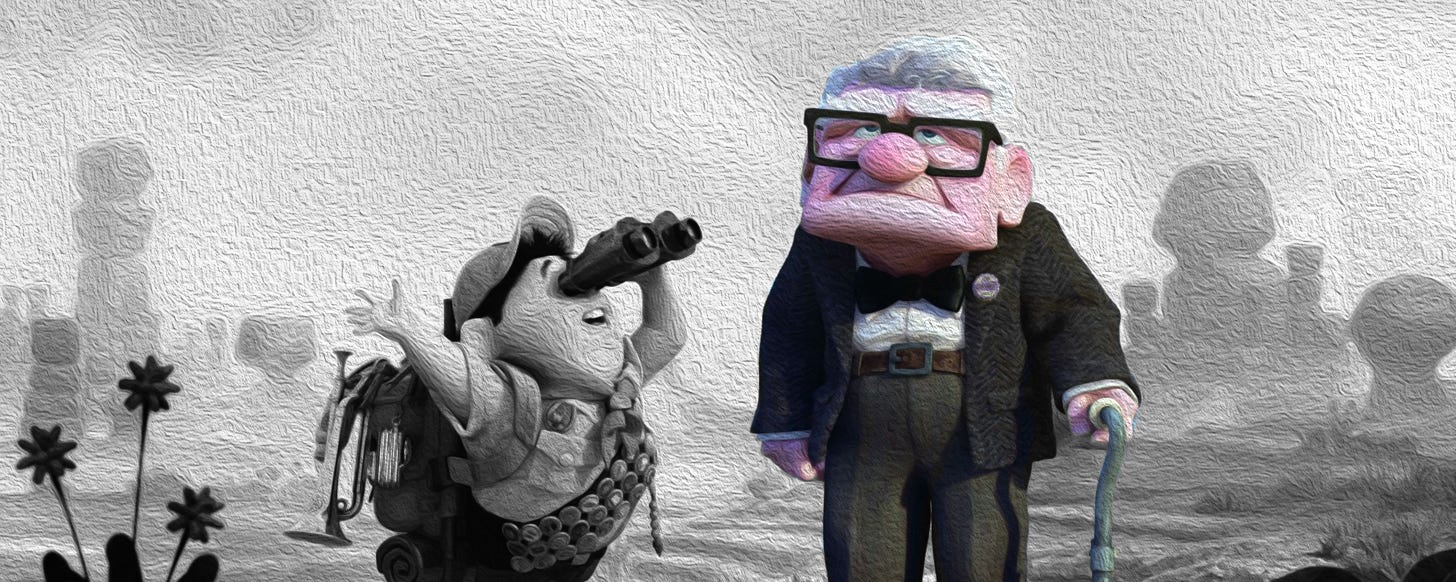
“The fundamental weakness of Western civilization is empathy.” Elon Musk
Given how difficult it can be to become completely empathetic, I formally disagree with Mr. Musk on this issue. I think empathy is strength. I hope the practice of writing this Substack has helped increase my empathy. But the proof is in the doing. Whenever a friend reaches out for help, or we hear about someone’s struggles through the grapevine, we get an opportunity to engage with their discomfort, to choose not to turn away. Each time we do, we learn more about our own personal definition of empathy, and what it’s really like to be a friend.

Let’s talk it out.
What are your limits when it comes to really understanding another person’s pain? Let me know in the comments.
An audio version of this post is available below (for paid subscribers).
Keep reading with a 7-day free trial
Subscribe to The Friend's Guide to Horrible Things to keep reading this post and get 7 days of free access to the full post archives.