

All of a Sudden
Handling emergencies with no warning.

An audio version of this post is available below (for paid subscribers).
My son wasn’t a sick kid. His behavior and appearance only shifted about a week before he was hospitalized. The whole thing blindsided us, slamming into our lives like a Mack Truck. One minute things were joyful, and the next they were almost impossible. Over time we grew used to it, developing tools and mastering our understanding of the problem. But nothing compares to those first few days where, all of a sudden, everything went wrong.

“When written in Chinese, the word ‘crisis’ is composed of two characters. One represents danger and the other represents opportunity.” John F. Kennedy
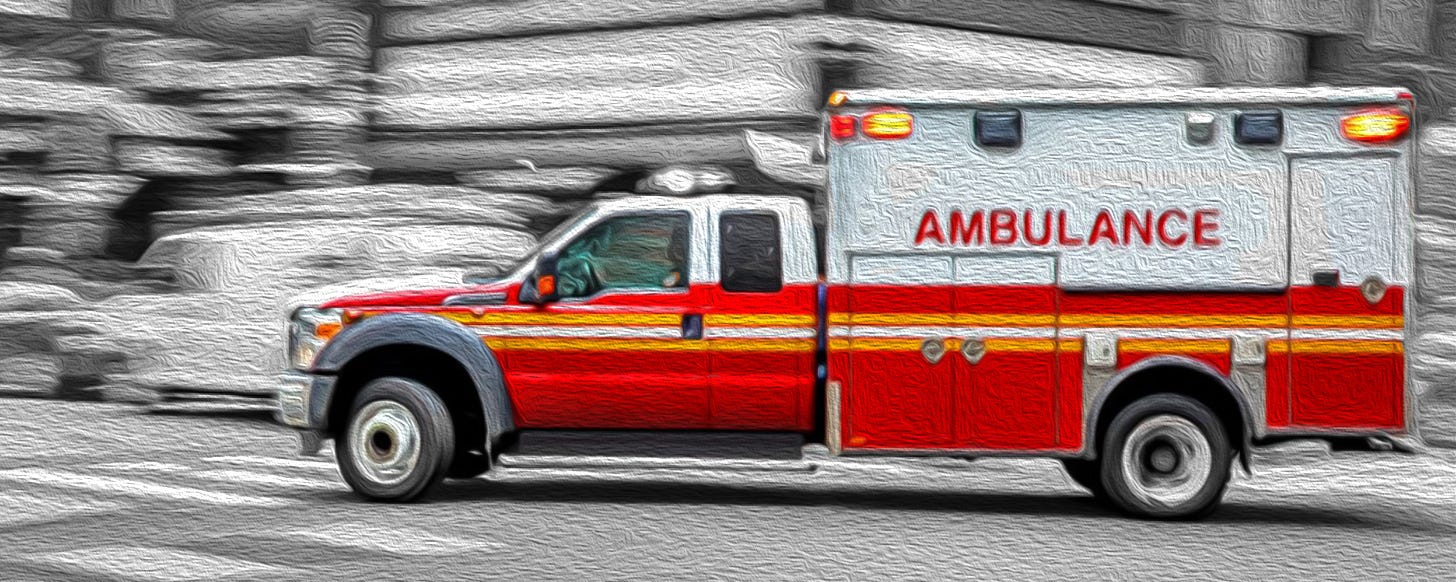
During a crisis, timing is crucial. Even if it’s lasted years or decades, reacting quickly to a fresh, spontaneous emergency saves your friend a lot of pain. And when that adrenaline kicks in, you’ll find you have a reserve of energy (albeit limited) that you can spend on getting things in order. The trick is knowing what to do and when.
Here’s a short checklist you can reference if every minute counts.
Take a breath.
You don’t have to do this right away, but at some point you need to recognize your body is consuming oxygen. Just make yourself conscious of it, see if you can let your mind pause for a few minutes or seconds, and then get back to work. It can be excruciating letting that time slip by when your friend is counting on you, but that’s all the more reason to relax for a spell. The calmer you are, the clearer you’ll think, and the more you’ll get done.
Assess the situation.
The American Red Cross has a catchy phrase for emergency preparedness: Check. Call. Care. Hopefully you’ll never have to use it. After you’re done reading about it, search for more specific actions like how to perform CPR on people of all ages, administer meds to someone who overdosed, or has asthma, or how to recognize and treat a seizure. Think of learning these skills as gaining superpowers. Batman would know how to do this stuff. Invest time in a class now to be ready for later.
Learn the plan.
Your friend is at the epicenter of their problem, so they’re running the show. When they give you a game-plan, write it down and follow it. If you’re not directly involved in their survival, there are still resources online that can help you get ready for all sorts of disasters.
Get what you need.
There are a surprisingly small number of common household items you can buy right now that would increase your personal security tenfold. I’m talking first aid kits, fire extinguishers, bottled water, smoke alarms, fresh batteries, generators, and organizers for important documents. Odds are you’ll never have to use them, but ask anyone who did and they’ll lament never taking such an easy step to give themselves peace of mind, and a leg up when things went sideways. If your kit is up to date and an emergency affects a friend who doesn’t have one, pass along your go-bag to them as an easy way to assist. Or donate items to local causes who are gathering supplies for people affected.
Stay updated.
As a lifelong resident of Los Angeles, California, I was addicted to the Watch Duty app during the wildfires in January of 2025. I refreshed it constantly, watching flame icons multiply across the county. It kept me up to date on my own neighborhood, and my friend’s as well. If a resource exists that can help you understand your friend’s situation, use it. Just absorb the information and keep it to yourself, or to your social group’s outer circles. Check in on your friend once or twice, and if you don’t hear anything, give them time to respond.
Rest.
You’re draining a battery and it needs to be recharged. You may think you’ll remain functional without sleep but if you run out of power the consequences will be swift. You don’t want that to happen when your friend is counting on you.
All this comes second to just reaching out to your friend and asking how you can help. Follow their lead, respect their wishes, and keep them safe and sane. A lot of what you learn will be trial and error, but the more prepared you are, the better off your friend will be.

Let’s talk it out.
What’s in your emergency kit? You have one, right? Let me know in the comments.
An audio version of this post is available below (for paid subscribers).
Keep reading with a 7-day free trial
Subscribe to The Friend's Guide to Horrible Things to keep reading this post and get 7 days of free access to the full post archives.